Black Friday week is here! 15% discount code: Animals

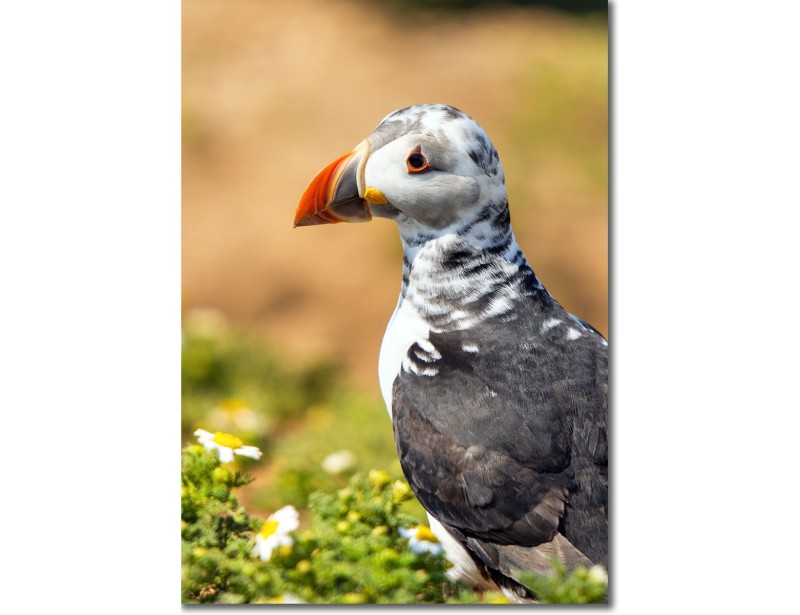
Puffling in repose wild spring daisies
£14.95
In stock
SKU
puffling-02
Picture of a puffin chick in repose amongst delicate wild spring daisies. Pufflings do not leave their burrows until they are fully fledged, usually around 40 to 55 days after hatching. During this period, they undergo a significant transformation, shedding their dark downy feathers for a more waterproof plumage. This change is critical as it enables them to survive in the ocean where they spend the majority of their lives.
Poster - Picture of a puffling in repose
Pufflings do not leave their burrows until they are fully fledged, usually around 40 to 55 days after hatching. During this period, they undergo a significant transformation, shedding their dark downy feathers for a more waterproof plumage. This change is critical as it enables them to survive in the ocean where they spend the majority of their lives. Once they venture out of their burrows, pufflings are guided by the moonlight to reach the sea. However, they can sometimes get disoriented and land in populated areas, leading to rescue operations by local communities to return these chicks to their natural habitat. Another captivating fact about puffin chicks is their solitary nature once they leave their burrows. Unlike other birds species, pufflings do not receive further care or guidance from their parents. Instead, they rely on their instincts to navigate the ocean, locate food, and evade predators, which is a testament to their resilience and adaptability. Overall, puffin chicks represent a fascinating study of avian adaptation and survival, as they navigate their early stages of life in often harsh and challenging environments.
Facts about Atlantic Puffins
Other Name(s): Common Puffin
Nick Names: Sea Parrot, Sea Clown, Sea Rooster
Scientific Name: Fratercula arctica
Size: 70 - 90 cm
Weight: 500g
Lifespan: 20 - 29 years
Diet: Sand eels, sprats, herring, capelin, shrimp, crustaceans, molluscs
Habitat: Open sea year round; cliff areas and islands during breeding
Distribution: North Atlantic Ocean, North Sea; During breeding, coasts and Islands of Norhtwest Europe, Arctic fringes, Eastern North America
Conservation: Least Concern
Prints of bird pictures
Our pictures are custom printed to order in high resolution, providing stunning details and vibrant colours. Our fade resistant ink technology will ensure that you enjoy your artwork for years to come. Free delivery.
Posters
- Printed in superfine resolution on premium quality, semi-gloss, photo poster paper.
- Despatched next working day by Tracked 24.
Framed posters
- Stunning quality, hand-framed art prints.
- Framed in a matte black, natural wood frame with a white mount.
- A4 & A3 are glazed with clear glass.
- A2 & A1 are glazed with clear acrylic glass.
- Custom made to order, despatched in 3-4 working days.
Canvas
- Printed on softly textured canvas combining natural cotton with polyester for colour vibrancy.
- Our canvas prints are printed and wrapped over the edge of a natural wood frame to provide beautiful wall art.
- Despatched in 1-2 working days.
Write Your Own Review